

Special JMMM Issue Available after the 2022 Meeting of Scientific and Clinical Applications of Magnetic Carriers
December 03, 2022 The special JMMM issue after the 2022 meeting is now available, check it out here:
https://www.sciencedirect.com/journal/journal-of-magnetism-and-magnetic-materials/special-issue/10CRH1HLML1
Seventeen original articles are now available at this link. Get a coffee and some cake, and look through these interesting articles, they are well worth it!
The editors for this special issue were Silvio Dutz, Lucia Gutierrez and Maciej Zborowski. Thank you very much for doing this!
Surgical Procedures to Lengthen Your Legs Use Magnetic Force for Extension
November 02, 2022As we find all magnetic procedures interesting, here is a new method for the leg lengthening of people. A 25 to 30 cm long rod between half and one centimeter is implanted surgically into the center of the long leg bones. Every day after that, the rod which contains some internal gears is lengthened by about 1 mm per day and thus stretches the leg by the same distance. The mechanical movement by these gears is induced by an external magnetic field. The body seems to fill in the stretched distance by physiological bone and other tissues. Have a look at some of the details, unfortunately described not in the most scientific way:
https://www.businessinsider.com/limb-leg-lengthening-surgeon-la-how-it-works-patients-2022-11
Sirine El Mousli and Melody Perret Won A Photo Competition
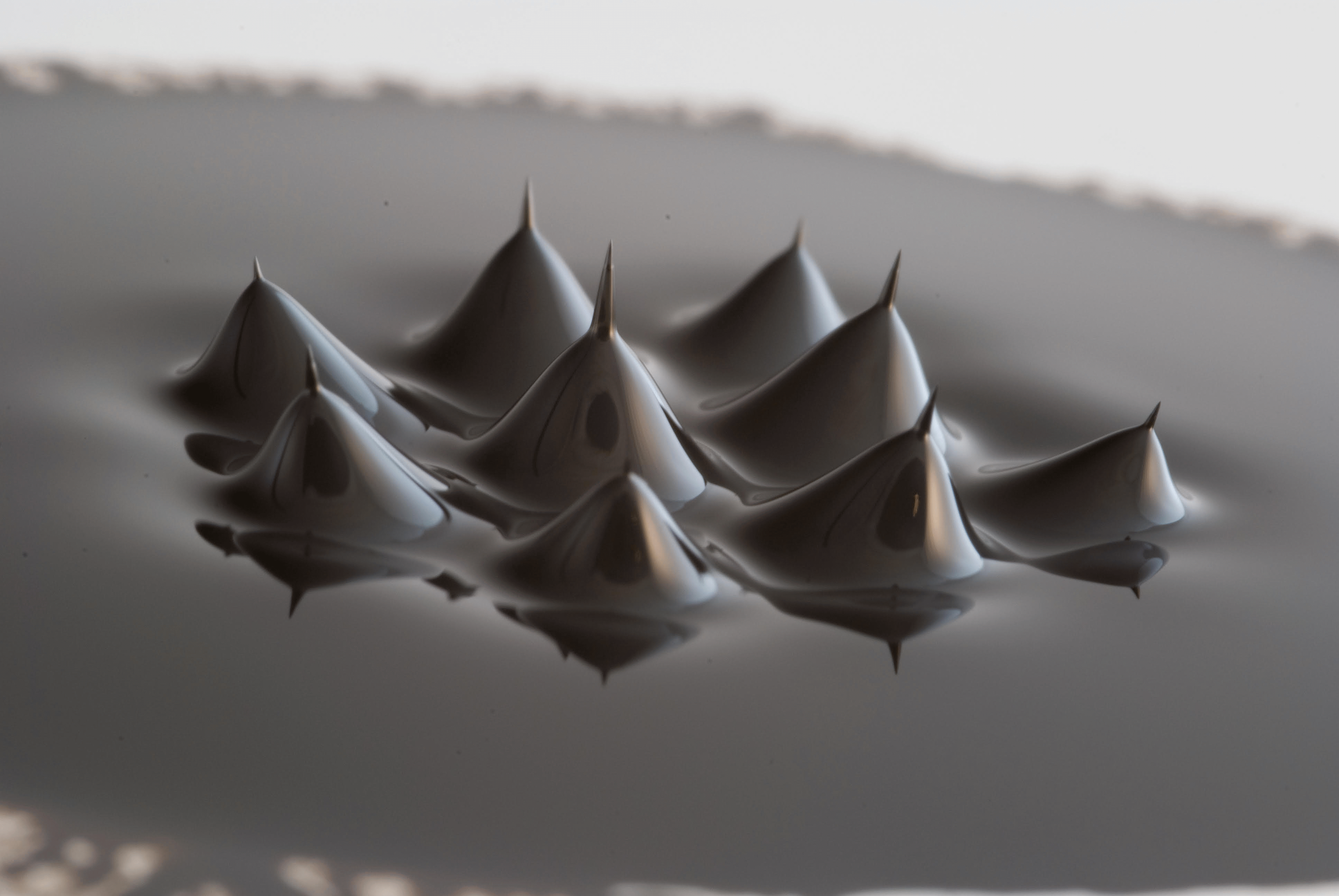
June 28, 2022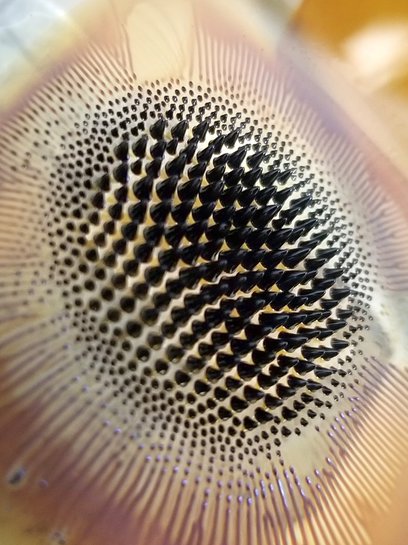 Sirine El Mousli and Mélody Perret from the PHENIX lab at the Sorbonne University won a the LaboPhoto competition of the French Chemistry Society with their beautiful ferrofluid picture. The title of the picture is "Fighting Cancer With Ferrofluids". Congratulations to both authors for this achievement!
Magnetic Carrier Meeting 2022 in London, England
June 14, 2022.JPG) 13th International Conference on the Scientific and Clinical Applications of Magnetic Carriers
13th International Conference on the Scientific and Clinical Applications of Magnetic Carriers
Magnetic Carrier Meeting 2022
from June 14-17, 2022
After skipping the 2020 meeting due to COVID-19, the 13th International Conference on the Scientific and Clinical Applications of Magnetic Carriers in London at the University College London (UCL) from June 14-17, 2022 was a great success. Exactly 209 experts and novices in the world of magnetic particles and their applications took part in this 4-day conference. The organization with the help of Prof. Nguyen Thanh's local team was flawless, the food was good, and reception and poster sessions were very animated. Thank you all for being with us at this wonderful meeting!
For more details about the 2022 meeting, go to the main meeting website.
Magnetic Cube Microbots
May 12, 2022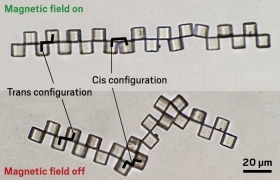 Janus cubes, polymer microparticles coated with metal on one side, self-assemble into various structures under the influence of a magnetic field, and manipulating the magnetic field turns the structures into microbots for use in drug delivery, in cell measurement, or as miniature actuators. Orlin Velev, a chemical engineer at North Carolina State University, outlined his group’s work. The researchers use photolithography to create polymer cubes about 10 µm across, then coat one side with a 10-nm layer of chromium topped by a 100-nm layer of cobalt. Placing the cubes between two electromagnets causes them to align and form a chain that stays connected after the field is turned off. Oriented one way (trans), the north-south poles of adjoining magnets align into a stiff connection. In the other orientation (cis), they can flip back and forth, so the chains fold and unfold when a magnetic field is applied. The group has made the chain fold around a cell and applied a magnetic gradient to move the captured cell. Another group at Swiss Federal Institute of Technology (ETH), Zurich, has shown it can control the microbots inside a rabbit eye as a possible microsurgical tool. Velev is studying if by squeezing a cell to measure its stiffness, he can determine whether it is healthy or infected with a virus. A related application involves contracting and expanding the chains to act as microactuators and tiny muscles.
New MPI Review
April 24, 2022.JPG) An new MPI review titled "Magnetic particle imaging: tracer development and the biomedical applications of a radiationfree, sensitive, and quantitative imaging modality" was just published by Stanley Harvey-Smith, Le Duc Thang and Nguyen Thanh in the journal "Nanoscale". The whole area is very nicely covered. The main feature is a presentation on the up-to-date literature for the development of SPIONs tailored for improved imaging performance, and developments in the current and promising biomedical applications of this emerging technique, with a specific focus on theranostics, cell tracking and perfusion imaging. The area of the superparamagnetic particles that are ideal for use with MPI is clearly the expertise of the authors.
An new MPI review titled "Magnetic particle imaging: tracer development and the biomedical applications of a radiationfree, sensitive, and quantitative imaging modality" was just published by Stanley Harvey-Smith, Le Duc Thang and Nguyen Thanh in the journal "Nanoscale". The whole area is very nicely covered. The main feature is a presentation on the up-to-date literature for the development of SPIONs tailored for improved imaging performance, and developments in the current and promising biomedical applications of this emerging technique, with a specific focus on theranostics, cell tracking and perfusion imaging. The area of the superparamagnetic particles that are ideal for use with MPI is clearly the expertise of the authors.
Check it out, the article is freely available at https://pubs.rsc.org/en/content/articlepdf/2022/nr/d1nr05670k.
New Review About Ferrofluids and Bio-Ferrofluids: Looking Back and Stepping Forward
March 21, 2022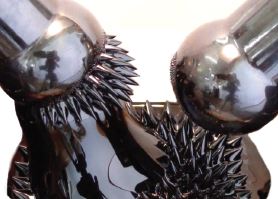 Several of our colleagues under the guidance of Ladislau Vekas have just published the largest review about ferrofluids that I have come across - 101 pages of it! They start out with some early relevant results from around 50 years ago, and then get into a comprehensive description of recent achievements in ferrofluid synthesis, advanced characterization, as well as the governing equations of ferrohydrodynamics, the most important interfacial phenomena and the flow properties. Finally, it provides an overview of recent advances in tunable and adaptive multifunctional materials derived from ferrofluids and a detailed presentation of the recent progress of applications in the field of sensors and actuators, ferrofluid-driven assembly and manipulation, droplet technology, including droplet generation and control, mechanical actuation, liquid computing and robotics.
Check it out here:
Socoliuc V, Avdeev MV, Kuncser V, Turcu R, Tombácz E, Vékás L (2022). Ferrofluids and bio-ferrofluids: looking back and stepping forward. Nanoscale, in print.
Record-Breaking Molecular Magnet
March 13, 2022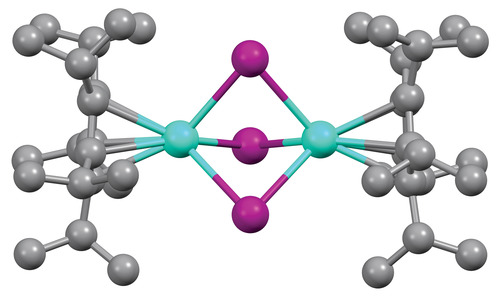 By coupling a pair of lanthanide ions within the same compound, researchers have created what they believe are the most magnetic molecules ever made.
“By all the traditional metrics of single-molecule magnets, they’re the best,” Nicholas Chilton says of the new molecules. Chilton, who’s based at the University of Manchester, collaborated on the work with Jeffrey Long at the University of California, Berkeley, and Benjamin Harvey at the US Naval Air Warfare Center Weapons Division. Although the molecules’ magnetism reveals itself only at low temperatures, Chilton hopes that these dilanthanide complexes might pave the way for new types of powerful yet lightweight permanent magnets.
Lanthanides such as neodymium and samarium partner with transition metals in the strongest rare earth magnets, which are used in some electric vehicle motors and wind turbines. In rare earth magnets, metal-metal bonds help align unpaired electrons in the lanthanides and their transition-metal partners, boosting the overall magnetism. Coupling two lanthanides in this way should lead to even greater magnetism, but it has proved difficult to forge bonds between them.
Although lanthanides have previously bonded together inside fullerenes, Chilton says, “as far as I’m aware, these are the first conventional molecular lanthanide-lanthanide bonds.” The new complexes contain a pair of lanthanide ions—terbium or dysprosium, for example—bridged by three iodide anions and capped by bulky aromatic ligands. A single, shared electron sits in a bonding orbital between the two ions, and this helps align all the unpaired electrons on both ions.
For more details, check the article here: https://www.science.org/doi/10.1126/science.abl5470.
For more information, check out our Archives.
September 2017
Search this site with the power of