

Magnetic Guiding with Permanent Magnets
October 09, 2021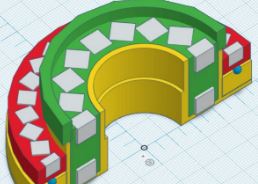 Peter Blümler from the University of Mainz published a very nice review about the basics of magnet systems that can be used to guide magnetic particles against viscous forces. Halbach arrays are very nicely explained, with all the formulas, and then put to action.
What's included in this paper: The equations of magnetic fields and forces as well as velocities are derived in detail and physical limits are discussed. The special hydrodynamics of nanoparticle dispersions under these circumstances is reviewed and related to technical constraints.The possibility of 3D guiding and magnetic imaging techniques are discussed. Finally, the first results in guiding macroscopic objects, superparamagnetic nanoparticles, and cells with incorporated nanoparticles are presented. The constructed magnet systems allow for orientation, movement, and acceleration of magnetic objects and, in principle, can be scaled up to human size.
Check out this interesting article here.
European Inventor Price 2021 Goes to Two of Our Own
June 18, 2021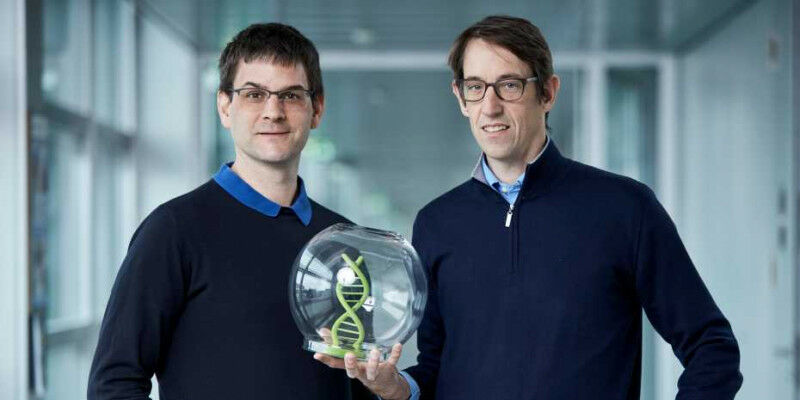 The European Patent Office honours Robert Grass and Wendelin Stark, professors of chemical engineering for their research in DNA encapsulation. Their invention enables the storage of digital data for thousands of years and product tracing throughout supply chains.
"DNA has a really high storage capacity," says Robert Grass. "A whole library can be stored in a really tiny amount of DNA for a millennia." Grass, professor and chemical engineer and Professor Wendelin Stark, who heads up the Functional Materials Engineering Lab at ETH Zurich are pioneers of DNA encapsulation. Masterfully combining nature with patented technology, their invention provides a novel method for synthesizing digital data into artificial DNA. The process even includes coding for error-correction contributed by fellow ETH Zurich engineer and data scientist, at the time, Reinhard Heckel. The team also achieved error-free data recovery, even after environmental exposure tests that simulate the equivalent of thousands of years of storage.
Developing nanometer-sized glass beads with diameters 10,000 times thinner than a sheet of paper, the beads protect the DNA from the corrosive forces of nature in much the same way that amber protects fossilized insects. Their invention enables digital DNA storage for thousands of years, meeting challenging data storage needs as technology accelerates at an exponential rate.
Eager to demonstrate the vast potential applications of their novel technology, Grass and Stark partnered up with English band, Massive Attack to commemorate the 20th anniversary of their Mezzanine album by encoding it in DNA. The album’s DNA was also incorporated into spray paint used to create an artwork with literally thousands of DNA copies of the album embedded in the paint on canvas work. They also encoded in DNA the premiere season of the Netflix television series, Biohackers demonstrating the versatility of the technology.
The glass-encapsulated DNA storage method that the professors and their research team have been developing since 2012 has also been commercialised by the former doctoral students Michela Puddu and Gediminas Mikutis with the ETH spin-off, Haelixa AG which they co-founded in 2016. At Haelixa, DNA is being used to label products such as precious stones, gold, and even organic cotton, to ensure that product origins or working conditions - are traceable throughout the supply chain. Grass and Stark have also co-founded several other companies including ETH spin-offs TurboBeads LLC and hemotune AG.
Microvehicles to Navigate Blood Vessels Upstream
April 17, 2021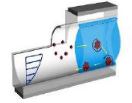 Researchers led by ETH Zurich Professors Daniel Ahmed and Brad Nelson recently developed microvehicles that are small enough to navigate our blood vessels and can be propelled against a fluid flow using ultrasound. To achieve this, the researchers used magnetic beads made of iron oxide and a polymer with a diameter of 3 micrometers, and studied their behavior in a thin glasstube, which was similar in size to blood vessels in a tumor. The team then employed a magnetic field to induce the particles to cluster into a swarm, before using ultrasound to guide the cluster close to the wall of the tube. Finally, the researchers switched to a rotating magnetic field to propel the microbeads against the flow. Future applications include microsurgery, precisely delivering cancer drugs to tumors and transferring drugs from blood vessels into the tissues of the brain.
Check out the details here, with movie: https://www.nature.com/articles/s42256-020-00275-x
Ultrafast Terahertz Magnetometry Could Enable Heat-Free Magnetism Control
March 30, 2021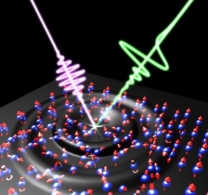 Physicists have precisely measured the ultrafast change in a magnetic state in materials by observing the emission of terahertz (THz) radiation that accompanies such a change in magnetization. An international research team that included scientists from Bielefeld University, Uppsala University, the University of Strasbourg, the University of Shanghai for Science and Technology, Max Planck Institute for Polymer Research, ETH Zürich, and the Free University Berlin developed and tested the ultrafast magnetometry method.
The work could pave the way for spintronic research and technologies based on a purely acoustic and, where possible, heat-free, ultrafast control of magnetism.
This principle states that a change in the magnetization of a material must result in an emission of electromagnetic radiation that will contain complete information on this change. If the magnetization in a material changes on a picosecond timescale, the emitted radiation will belong to the THz frequency range. This radiation, known as magnetic dipole emission, is weak and can be easily obscured by light emission that has originated elsewhere.
For more information, go here.
Special JMMM Issue Available - Scientific and Clinical Applications of Magnetic Carriers
March 21, 2021 While the 2020 meeting could not take place, you still had the opportunity of submitting a magnetic particle related article for a special JMMM issue, as we have done after all recent meetings. Twenty-five original articles are now available at this link. Get a coffee and some cake, and look through these interesting articles, they are well worth it!
And thank you Silvio Dutz and Maciej Zborowski for being the editor for this special issue.
www.sciencedirect.com/journal/journal-of-magnetism-and-magnetic-materials/special-issue/10L1Q3Q882M
European School on Magnetism (ESM) Open for Enrollment
February 28, 2021The next session of the European School on Magnetism (ESM) is scheduled to take place in Cluj-Napoca, Romania, 6-17 Sep 2021. It will be organized in a mixed format, on-site and on-line. This shall allow all to participate whatever their wish or ability to travel at the time, and also beyond the onsite hosting capabilities for the waiting list. Nevertheless, we feel ready to turn it fully on-line if sanitary conditions requested it.
As with previous sessions of ESM, the 2021 School aims at providing a thorough insight into magnetism through a broad series of fundamental lectures, and to address a specific topic of current interest in more detail. The topic chosen for the 2021 School is: “From fundamental properties of matter to magnetic materials and applications”. We intend to cover modern aspects of bulk and layered materials, both about their fundamentals and their applications.
The School is addressed mainly at PhD students and post-docs, both experimentalists and theoreticians. It will consist of approximately 40 hours of lectures, student projects conducted in small groups, practicals and tutorials, open question sessions (5-10h), and free access to a library on magnetism. Attendees will be able to present their own work during poster sessions. The detailed program is available from the web site: http://magnetism.eu/school/2021/program.
Request for participation to the school opens today. Potential attendees are expected to provide, along with their application form, a motivation letter and, for PhD students and post-docs, a recommendation letter from their supervisor. For more details, check out this flyer here.
Embracing defects and disorder in magnetic nanoparticles: the emergence of defect-engineering as a new approach to optimize particle properties
February 19, 2021.JPG) To improve the performance of magnetic nanoparticles for biomedical applications, single-crystalline and defect-free nanoparticles have thus far been aspired. However, in several recent studies, defect-rich nanoparticles outperform their defect-free counterparts for example in magnetic hyperthermia and magnetic particle imaging. In the progress report “Embracing defects and disorder”, an overview on the state of the art of design and characterization of defects and resulting spin disorder in magnetic nanoparticles is presented with a focus on iron oxide nanoparticles.
To improve the performance of magnetic nanoparticles for biomedical applications, single-crystalline and defect-free nanoparticles have thus far been aspired. However, in several recent studies, defect-rich nanoparticles outperform their defect-free counterparts for example in magnetic hyperthermia and magnetic particle imaging. In the progress report “Embracing defects and disorder”, an overview on the state of the art of design and characterization of defects and resulting spin disorder in magnetic nanoparticles is presented with a focus on iron oxide nanoparticles.
The authors Aidin Lak, Sabrina Disch & Philipp Bender emphasize the beneficial impact of defects and disorder on intracellular magnetic hyperthermia performance of magnetic nanoparticles for drug delivery and cancer therapy. This report illustrates that defect-engineering in iron oxide nanoparticles emerges to become an alternative approach to tailor their magnetic properties for biomedicine, as it is already common practice in established systems such as semiconductors and emerging fields including perovskite solar cells. Additionally, the authors offer their perspectives and thoughts on how to deliberately induce defects in iron oxide nanoparticles and their potential implications for magnetic tracers to monitor cell therapy and immunotherapy by magnetic particle imaging.
This forward-looking progress report can be found on Lak, A., Disch, S., Bender, P., Embracing Defects and Disorder in Magnetic Nanoparticles. Adv. Sci. 2021, 2002682. https://doi.org/10.1002/advs.202002682
Info About the Next IWMPI Meeting
December 27, 2020The International Workshop on Magnetic Particle Imaging, IWMPI, will be skipped in 2021 and held next in March 2022. The conference is currently planned as a face-to-face event. However, if the pandemic situation would not allow that, then it would again be a virtual meeting, as the IWMPI 2020.
The online meeting IWMPI 2020 had a total of almost 1000 participants who watched the livestream. The contributions in the Supplement to the International Journal of Magnetic Particle Imaging IJMPI (Vol 6 No 2 Suppl 1 (2020): Int J Mag Part Imag) are widely read and have good download numbers. Most talks were recorded and are included in the new MPI Media Library. While you have to register for the library, it is free of charge.
For more information, check out our Archives.
September 2017
Search this site with the power of